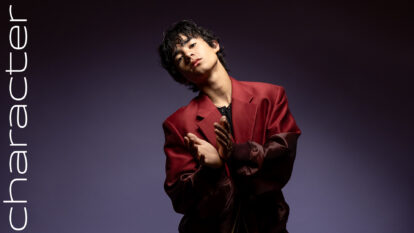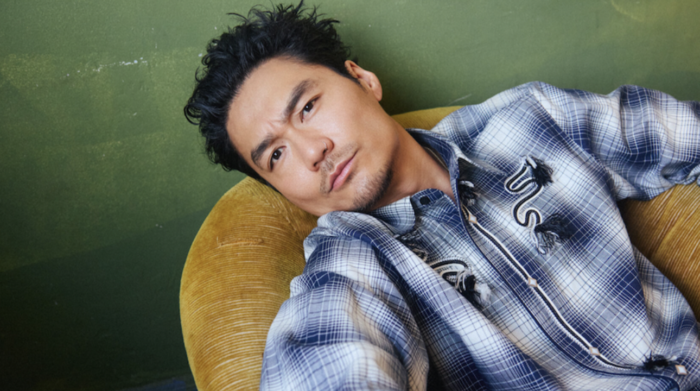
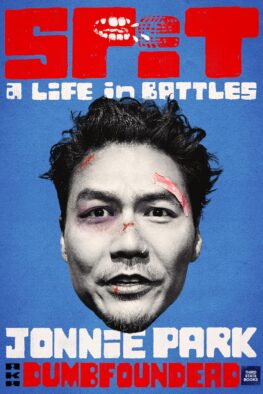
Known to the world as Dumbfoundead, the Los Angeles-bred rapper, actor, and filmmaker Jonnie Park, found solace in hip-hop. Growing up amid a household shaped by domestic abuse, addiction, and instability, he discovered in battle rap the one thing that gave him direction, confidence, and a voice. What followed was a career that defied every conventional path, building toward the film and television stories he always wanted to tell. His memoir titled Spit: A Life in Battles on the way, is scheduled for release on April 14, 2026.
Tesia Kuh: When did you realize that being Asian was a superpower?
Jonnie Park: I think I found that out early as going into these spaces where it was predominantly Black and Latino open mics and places to perform and battle as a battle rapper. I think a lot of people might look at that as something that is a crutch and something that might not help you, but I actually saw that as an opportunity to stand out. If there’s a sea of young Black kids rapping all over the place and this Asian kid comes out, people are still curious to see what I’m gonna say. I always found that to be a superpower, and hip-hop has always been about unique voices and standing out. As soon as I heard of a crowd reacting to one of my punchlines, it’s kind of like that moment that the spider bit Peter Parker and turned him into Spider-Man.
TK: How did your friendship with Anderson.Paak evolve over the years and what was your contribution to K Pops?
JP: Me and Anderson’s been friends since our early 20s as musicians coming up in the Los Angeles scene, playing a bunch of gigs, you know, sleeping on couches and all of that stuff. The past few years, as both of us have been trying to break into the TV and film industry with our own stories and ideas, he brought an idea to the table. I introduced him to some people, and that’s kind of where our journey began with kind of meeting some people who was willing to produce it as well as to link us up with some writers to develop the story even further. It’s been, like, a five-year journey, and finally the movie’s hitting VOD (videon on demand) soon, and some big announcements coming up very soon. But on top of that, he has a soundtrack that he’s gonna release. Kind of the first official time I’ve really heard a true West-meets, Korea collaborative project. We just got back from him shooting tons of promo content for that, linking up with K-pop artists, shooting music videos, so the rollout is gonna look pretty crazy, honestly.
TK: What era are you currently in right now?
JP: I feel like all the things I’m pursuing now are interests that I’ve had for quite a while. Even before I started rapping, I was really into filmmaking. I was part of an inner city filmmaking program. I was actually a child actor at one point. When I was 10 years old, I was doing commercials. I did a PlayStation 1 commercial. So these are things that I actually dragged my mom to take me to, whether it was auditions, or finding an agent. So I think when I went to my teenage years, I got into music, but I’m kind of returning to things that I’ve always wanted to do. When I was making songs, I was directing my own music videos and kind of being able to use the tools and pursue the interests that I’ve had early on into my music. I’m kind of in my acting era right now as well as writing. I’m doing both of those things, TV and features, but I have a big interest in television. I grew up watching TV and growing up and learning all my humor from television and ’90s sitcoms and all of those things. So TV is something I’m very interested in, and a lot of my acting stuff coming up is TV-related.
TK: What is your favorite music video you’ve directed?
JP: I’ve co-directed every music video, but a few of my favorites are “Safe”, and it was actually commentary on #OscarsSoWhite, like, that time that that was happening and wanting less people of color in these roles. The other night I watched the Oscars and the roster of the only yellow men were all statues Superimposing my face on iconic white actors’ faces, and this was pre-AI and deepfake and all that stuff, so that was a fun one to do. A lot of the ones that I’ve shot in Korea are great. “Water”, “Hyung.” I just have so many music videos, and it’s great looking at them because none of them ever had a real budget. Indie filmmaking at the most lowest budget levels, and I think that’s great. A lot of my creativity came from that. It’s like using the limited resources to create something great.
TK: What do you hope people will take away from your book?
JP: My book is entitled Spit: A Life in Battles, and I think the word spit is so provocative. It could sound very disrespectful, but it’s also the thing that helped me become the man I am today and gave me the audacity to say the things I wanted and share the things I wanted and be unapologetic. When I talk about the life and battles, I don’t just mean rap battles. I talk about the battles within my community, the battles within my family life, the battles I’m still having now. So I think people are gonna be pleasantly surprised that this isn’t just a hip-hop-centric book. It’s a very gritty Asian American story and one that we haven’t seen before, and I think many memoirs we’ve seen are talking about more of an Asian American person who’s a fish out of water. This is a very confident young man who had a coming of age in a field that requires a lot of confidence, that requires a lot of grit, and a Southern California Asian American story, you know? And I’m excited for people to read about that.
TK: What led to your decision of dropping out of high school?
JP: Didn’t even feel like a decision. I started slowly transitioning out, out of school. I started missing days and then missing months, and it just all of a sudden I’m just not in school anymore, and it was crazy, you know, ’cause my parents didn’t know for, like, two years. I think that’s just, like, a testimony to how busy my parents were with their own lives and, you know, going through a lot within the household. Like, there was a lot of domestic abuse and violence in my household, and I can see the stress stacking up on my father and his alcohol problems and gambling problems a- and they had a whole list of problems of their own, which gave me a little bit too much freedom to kind of roam the streets of LA. I got into trouble, but luckily I found hip-hop, and I got obsessed with it. So it could have gone the wrong way, but hip-hop definitely kind of routed me into a direction where I was able to turn it into something.
TK: How do you keep youreslf creative?
JP: It’s really all I know. I started in this industry when I was 15 years old. I started rapping when I was 14. By the time I was 18, I was touring and many of them being colleges, Ivy League universities that would book me for Korean, you know, culture nights and Asian student associations, and I was the same age as these kids attending the colleges, but that was my job. I talk about it a little bit in my book. I name it the kimchi circuit. They would book, like, big YouTube artists for specific Asian student orgs. It’d be a lineup of, like, me and some big YouTuber kid who plays, like, Bruno Mars covers to, like, Jabbawockeez-type dancers or Quest Crew, and it was just this variety show of Asian artists doing stuff, and I just filled in the rap portion of it. So in a time where you wouldn’t see many Asian American artists making a living off of their art, this was actually a circuit that we would be able to make a living off of. So doing that and touring for a long time, I think I never got into corporate world or a salary job or anything. It was an easier decision to kind of pursue. I think once you get used to that six-figure job and lifestyle, it’s hard to go backwards and wanna go pursue something that, that’s gonna take a lot of time.
TK: What advice do you have for the younger generation who feel they are stuck in the system?
JP: We’re in such a better place for younger Asian artists with the tools we have. We’ve later found out that nothing is predictable. Nothing is safe. No type of job is safe. You know, you might as well pursue the thing you love and fail at that than anything else you thought was more safe to pursue.
That’s my biggest advice is be fearless in what you’re pursuing. There’s no safer route.
Watch the full interview here