JoySauce TV is streaming a Halloween marathon of Japanese and Korean horror. We pulled five titles, including an overlooked Korean fairy-tale chiller with serious set design.
One man’s obsession with the swirl in his miso soup is the least of the problems in a certain Japanese town, and that is the kind of detail that makes Asian horror movies so hard to shake. This Halloween, JoySauce is putting a stack of them on your screen, with a marathon on its Roku and Amazon channels and on JoySauce TV. It starts at 5 p.m. PT on Saturday and runs until 1:30 a.m. Sunday.
Critic Andy Crump singled out five titles from the lineup. Together they show how much range the region’s horror has, from rubber-suited camp to zombie tragedy to a spooky fairy tale built with serious craft.
The weird, the sad and the spiral
Start with the silliest. Tomoo Haraguchi’s Death Kappa (2010) is a love letter to the 1960s Godzilla era of Toho Co., when the films were colorful and goofy, a sharp turn from the political allegories that came before. Crump points to 1967’s Son of Godzilla as the touchstone. A failed idol singer named Kanako (Misato Hirata) befriends a kappa, plays him her music, and gets rescued by him when nationalist mad scientists and their fish-man samurai kidnap her. Crump calls it a hoot, and describes it as an at times uncomfortably kinky Power Rangers episode. He also finds the kappa adorable.
The mood drops with Kenta Fukusaku’s Black Rat (2010). Crump places it in a long line of Japanese horror that tracks national anxieties. In the 2000s, adult suicides slowly declined while youth suicides didn’t, and films like 2001’s Suicide Club made that public health crisis their subject. Black Rat runs those feelings through a standard slasher. It has no ghosts, which is a change in a genre best known for the onryo, the vengeful spirits of Sadako in Ringu (1998) and Kayako in Ju-On (2002). Here the haunting is figurative: the spirit of a girl betrayed by her friends.
Yeon Sang-ho’s Seoul Station (2016) is the animated prequel to Train to Busan, and the two arrived within a month of each other. Where Train to Busan fills its carriages with a range of social classes, Seoul Station stays with marginalized people. Hye-sun (voiced by Shim Eun-kyung) is a young woman escaping a brothel, and Seoul’s homeless population is part of the story. Crump says Yeon knows how to pull at the heartstrings in the middle of zombie chaos, and that the film’s emotional notes land as hard as its violence.
Then there’s Uzumaki, Higuchinsky’s 2000 adaptation of Junji Ito’s manga. High schooler Kirie (Eriko Hatsune) watches her boyfriend’s father fixate on spirals, in soup broth and in snail shells, until the obsession spreads across the whole town and drives people to self-harm and madness. Higuchinsky throws dissolves, smash cuts and flash cuts at the viewer. He also splits the difference between Ito’s black-and-white drawings and live action, which gives the film a contrasty, ethereal look.
The one that deserves more credit
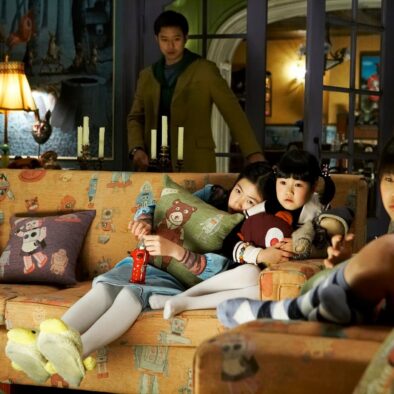
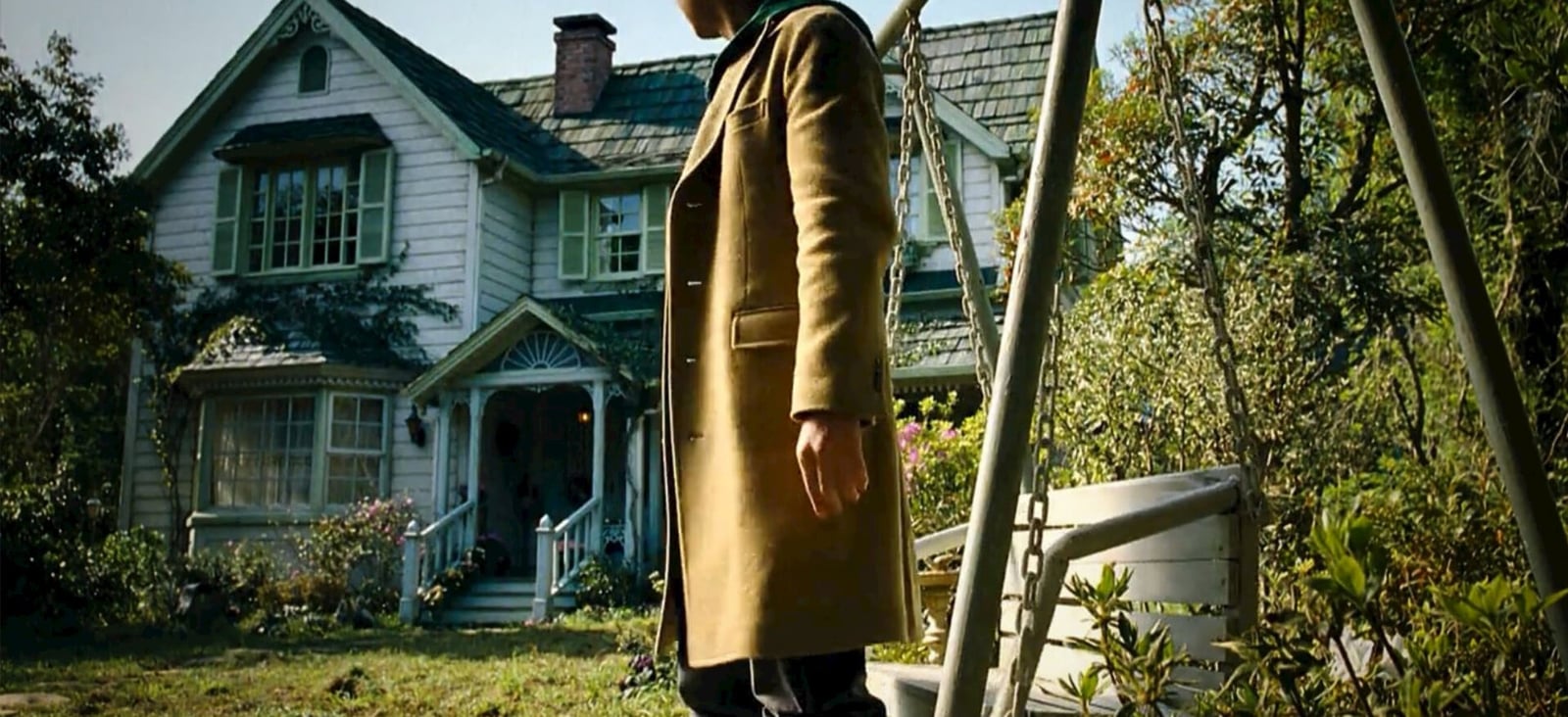
The fifth pick is the one we would push hardest. Yim Pil-sung’s Hansel & Gretel (2007) is a South Korean horror film that, in Crump’s words, deserves far more mention than it gets. He credits its rich production design, well-executed frights and sustained atmospheric unease.
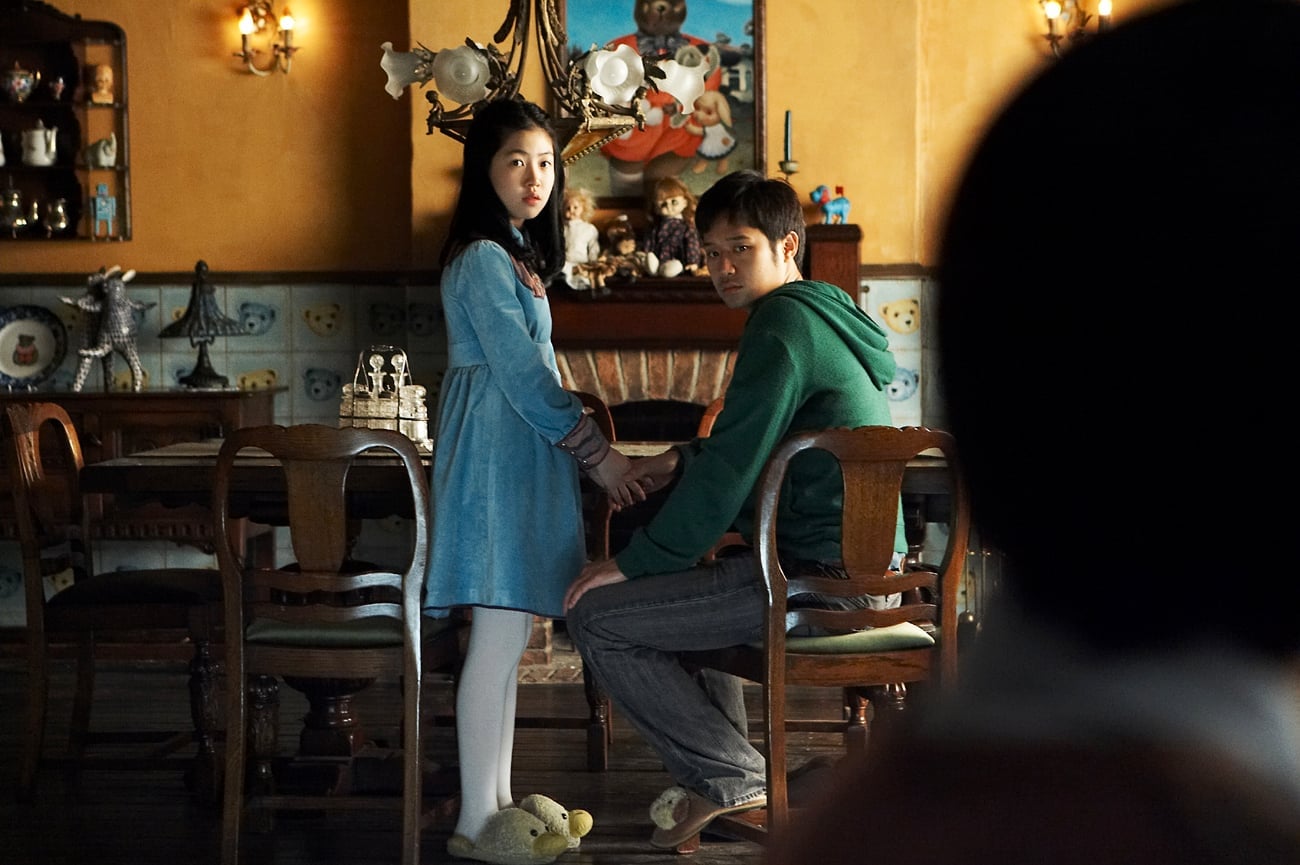
Don’t expect a straight retelling of the Grimm story. The fairy tale works as a motif, not as the plot, and Crump finds that refreshing, since adapting the Grimms’ text would have been the obvious move. Instead, a man named Eun-soo (Chun Jung-myung) crashes his car on a highway and wakes up in a wood. There he meets three siblings: Young-hee (Shim Eun-kyung, who is also in Seoul Station), Man-bok (Eun Won-jae) and Jung-soon (Jin Ji-hee). They live in a disused orphanage and have secrets. They may also be murderers.
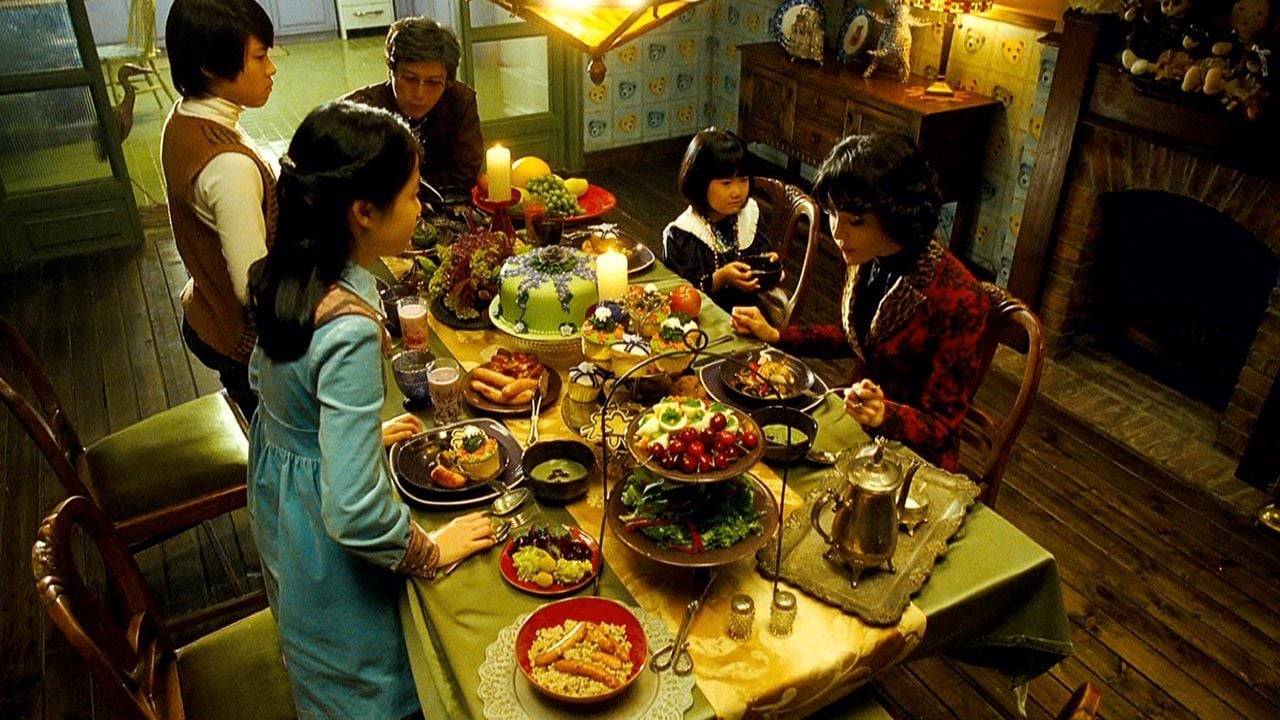
Reviews at the time reached for Pan’s Labyrinth, since both films are dark fantasies with child protagonists. Crump argues the better match is Kim Jee-woon’s A Tale of Two Sisters (2003), which also circles tragic children with a traumatic past and a strong dose of the creeps. If you liked that one, this belongs on your list. Because the film leans on its rich production design to build the dread, it’s worth watching with the lights low and the screen as big as you can manage.
Build the night around it
The marathon has more than these five. Also in the lineup are Hakaider, Dark Tales of Japan, Doomed Megalopolis, Death Trance and Shopping For Fangs.
Crump’s advice for a party is to vary the menu. A great Halloween night, he writes, needs more than one horror movie, the same way it needs variety in costumes, food and drinks. This lineup makes that easy. You could open with a kappa and a failed pop star, move on to a town going under in spirals, and finish at an orphanage in the woods, where three children are waiting and not all of them are what they seem.
Via JoySauce