Photo: Michael Palma
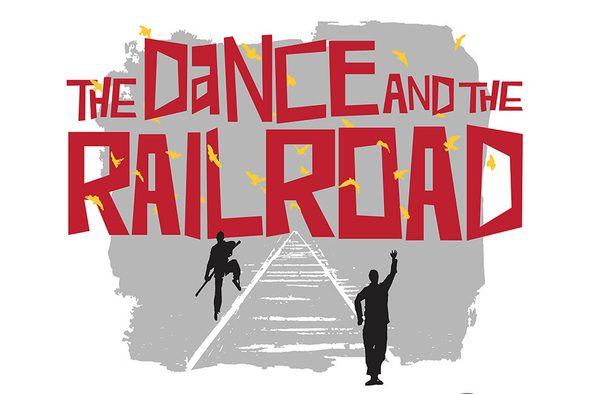
More than 30 years after its last Los Angeles production, one of David Henry Hwang’s earliest works, The Dance and the Railroad returns to Los Angeles with a rare revival.
The transcontinental railroad is often remembered as a symbol of American progress. In The Dance and the Railroad, Hwang shifts the focus to the people whose labor made that progress possible. Centering on two Chinese immigrant laborers, Lone and Ma, the Chinese American playwright and screenwriter explores identity, ambition, friendship, artistic expression, and the struggle to maintain a sense of self in an unfamiliar country.
Long before M. Butterfly earned Hwang a Tony Award in 1988, The Dance and the Railroad was already engaging with questions that would become central to his body of work: how people are perceived, how culture shapes identity, and what happens when individuals are reduced to the roles others expect them to play. The Dance and the Railroad premiered in 1981 at New York’s New Federal Theatre and went on to receive a Drama Desk Award nomination for Best Play.
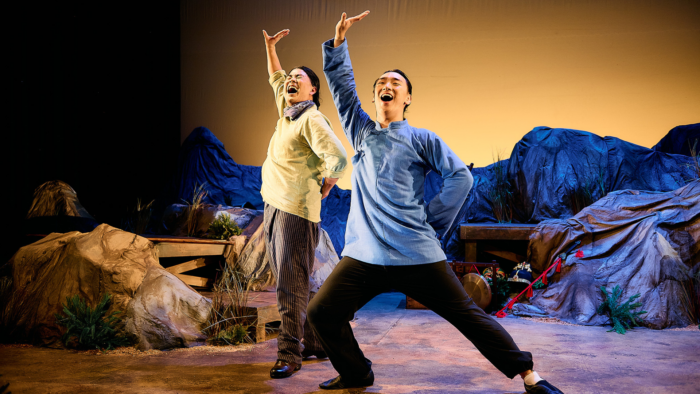
Set against the backdrop of the 1867 Chinese Railroad Workers’ Strike, the play follows Lone and Ma, played by Tony Jin and Scott Keiji Takeda, as they work to build the transcontinental railroad. Their lives are shaped by grueling labor, isolation, discrimination, and cultural displacement, but Hwang does not allow them to be defined solely by their circumstances.
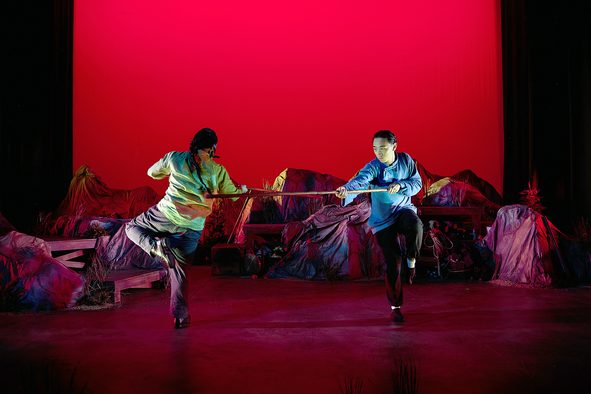
Photo: Michael Palma
Instead, their shared love of Chinese opera opens a window into another part of their lives. Away from the railroad camp, Lone and Ma practice together in the mountains of the Sierra Nevada, finding in the ancient art form a connection to their culture and a temporary escape from the demands of their work. For them, performance becomes more than entertainment. It becomes a way to remember who they are, express who they want to become, and imagine a life beyond the railroad.
That tension between labor and art gives the play much of its emotional weight. While the historical contributions of Chinese immigrant workers remain central to the story, Hwang is equally interested in the personal lives behind that history – their ambitions, disagreements, relationships, and dreams. Ma’s idealism and Lone’s pragmatism offer contrasting perspectives on what it means to build a future under circumstances neither man fully controls.
At its core, The Dance and the Railroad challenges the idea that history can be understood solely through the monuments left behind. The railroad represents a major chapter in American history, but Hwang asks audiences to look beyond the finished structure and toward the individuals who built it. The play insists that these workers be remembered not simply for their labor, but for the lives they imagined beyond it.
Now, Asian American theater collective Artists at Play and Latino Theater Company are bringing Hwang’s work back to Los Angeles for the first time since East West Players’ 1993 production. Directed by Katherine Chou, the revival marks the fourth collaboration between the two theater organizations in four years and arrives as Artists at Play celebrates its 15th anniversary and the nation marks its 250th anniversary.
More than three decades after its last L.A. production, The Dance and the Railroad returns with a history worth revisiting, and with questions that remain deeply relevant: Who gets remembered? Whose contributions become part of the national story? And beyond the work they leave behind, what do we remember about the people who made it possible?
The Dance and the Railroad opens Saturday, October 3, at 8 p.m. at the Los Angeles Theatre Center, with performances continuing through November 1. Shows run Thursdays, Fridays, and Saturdays at 8 p.m. and Sundays at 2 p.m. For more information, visit latinotheaterco.org.
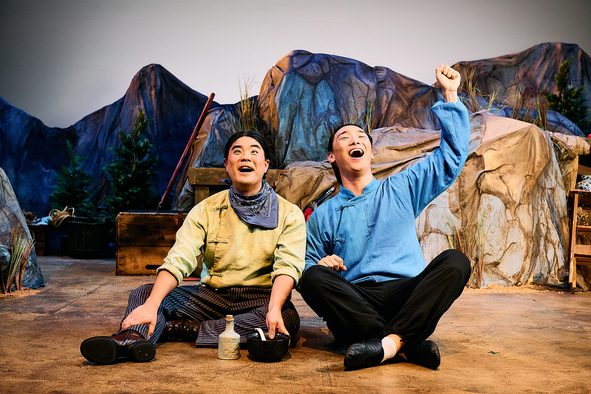
Photo: Michael Palma