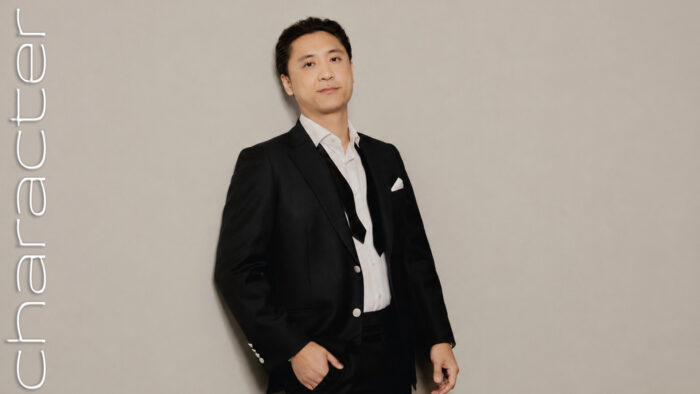
Albert Yang has helped shape Din Tai Fung’s evolution in the United States, carrying forward a family legacy that began in his parents’ kitchen and has since expanded into one of the most recognized hospitality brands in the world. From early days learning to make xiaolongbao as a child to leading major expansion efforts across North America, his approach is rooted in precision, culture, and an unwavering commitment to consistency at scale. As the brand continues to grow across new markets, this conversation looks at how he balances heritage with innovation, instinct with strategy, and what it takes to build excellence into every layer of a global operation.


Image Credit: Kenneth Medilo
You stepped into a family legacy that is both deeply rooted and globally recognized. What did it mean to you personally to join Din Tai Fung in 2015, beyond the business itself?
Joining Din Tai Fung in 2015 felt less like entering a business and more like stepping into a responsibility. My parents were immigrants, and growing up I watched how hard they worked every day in the restaurant. I always felt a strong responsibility to support them, to help carry forward what they built, and to make sure they didn’t have to keep working as hard while we took Din Tai Fung to the next level in the U.S. As I began working full-time, I quickly realized that Din Tai Fung represents more than just our family. So many people feel emotionally connected to what we do and look to us as a reflection of a certain type of food and culture. That created a deeper sense of purpose for me. It’s important that we continue to grow in a way that makes our team, our guests, and our community proud.
Growing up around the kitchen and now leading operations at scale, how has your understanding of hospitality evolved from something intimate to something systemic?
Growing up around the kitchen, hospitality felt very direct and personal. I watched how small details, how a dumpling was folded, how a table was greeted, and how issues were handled in the moment, shaped the guest’s experience immediately. It depended a lot on the people in the room. As we expanded, I realized that kind of instinct-driven hospitality doesn’t scale on its own. One example for me was dumpling training. When I started making dumplings at about 12 years old, there was no formal training, and it often took six months to a year for someone to make a xiao long bao up to standard through trial and error. Even after we introduced trainers, consistency still depended heavily on who happened to be teaching that day. As we opened more locations, we needed something more structured and repeatable. Building a training system helped translate what had once been passed down informally into something that could be taught consistently across teams.
Din Tai Fung is known for an almost obsessive commitment to precision, from technique to service. How do you translate that philosophy across multiple locations without losing its soul?
Translating precision across multiple locations without losing its soul comes down to culture and caring for people. One of our core values is modesty, which isn’t always common in corporate America. That sense of humility creates openness to feedback, improvement, and learning, which is essential when you’re trying to maintain very high standards across many teams. We also care deeply about our people because we understand that we are nothing without them. When team members feel supported and respected, they take real ownership of their work, and that ownership shows up in our food and service. Precision can be built through training and clear expectations, but without a strong culture behind it, it can start to feel mechanical. When people feel connected to the purpose of what they’re doing, consistency can be achieved while still feeling human.

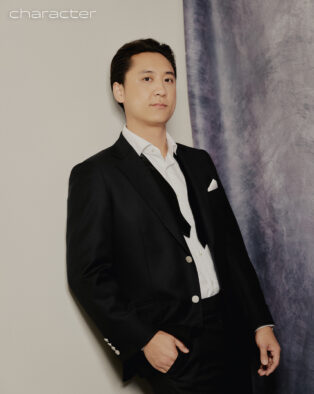
Image Credit: Kenneth Medilo
You’ve played a key role in expanding the brand across North America. What have been the most important lessons in adapting a heritage-driven concept to new markets like Los Angeles and Las Vegas?
One of the most important lessons has been learning how to stay true to authenticity while adapting to the expectations of each market. The core of Din Tai Fung, the portions, flavors, and techniques, comes directly from what was established in Taiwan, and preserving that consistency is essential to who we are. At the same time, operating in places like Los Angeles and Las Vegas means adapting to different service expectations. Guest expectations of service in the U.S. are different compared to Asia, so we’ve had to thoughtfully rethink the service experience while protecting the integrity of the food and the craft behind it. Another important lesson has been how critical infrastructure is to responsible growth. When I first started working full-time after college, we didn’t have a corporate team in the U.S. I still remember taking turns with my brother posting and responding to job ads on Craigslist every weekend just to support hiring. Experiences like that made it clear that expansion isn’t just about opening restaurants, it’s about building the systems and teams behind them. Creating that foundation has been essential to making sure each new location delivers the same experience guests expect from Din Tai Fung.
Under your leadership, operational excellence and food safety have become defining strengths. What does excellence mean to you on a daily basis, beyond metrics and reviews?
For me, one of the most important indicators of excellence is maintaining a goal of 70% five-star reviews. It’s an extremely demanding standard and something we were only able to achieve consistently in the past couple of years. If we can sustain that level while continuing to expand, it tells me we’re holding ourselves accountable to the same expectations across every location. But beyond metrics, excellence is about maintaining a relentless drive to improve every day. I expect every department to keep refining and building on what they do, even when things already seem to be running smoothly. Over time, that mindset becomes part of the culture. Excellence stops being something you measure and becomes something the organization works toward every day.
The brand’s purpose, “Celebrate Culture, Inspire Community,” feels especially relevant today. How do you bring that mission to life in a way that goes beyond words?
The best way Din Tai Fung can celebrate culture is by presenting the highest-quality representation of Taiwanese/Chinese cuisine possible while staying true to who we are as a brand. For us, food is the starting point, it’s the most meaningful way we share our heritage with our guests. Celebrating culture also means sharing our story in ways that feel genuine and accessible. During Chinese New Year, we give red envelopes to all of our team members and invite their families to dine with us, which is a meaningful way to share the traditions behind the holiday. Our dumpling ornaments during the holidays may seem like a small detail, but seeing dumplings on Christmas trees is especially meaningful to me because it blends Taiwanese/Chinese and American traditions. Inspiring community shows up in how we support people beyond the restaurant. During COVID, we donated thousands of meals to hospitals, and more recently during the Los Angeles fires, we supported small local businesses affected by the disruption. For us, celebrating culture and inspiring community isn’t something separate from the business, it’s part of how we operate every day.
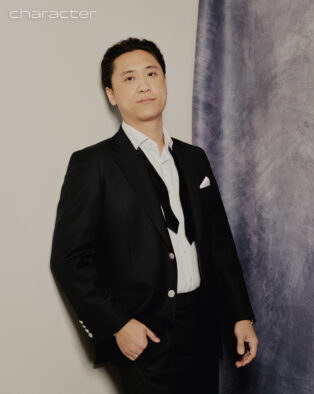

Image Credit: Kenneth Medilo
Coming from a background in hospitality at Cornell, combined with a family lineage in the business, how do you balance instinct versus formal strategy when making decisions?
Growing up in Din Tai Fung, our instinct has always centered on the guest experience. The number one priority is to provide a consistently excellent experience, and that perspective comes from being close to the restaurants from an early age. That instinct hasn’t changed. Formal strategy helps us scale those decisions responsibly. Data plays an important role in validating those instincts and helping us prioritize our efforts. In practice, instinct helps set the direction, and strategy helps confirm that direction while ensuring we execute consistently as we expand.
What’s your “Call Your Shot” moment — when did you decide to go after something and refuse to let uncertainty stop you?
Opening our New York City restaurant was that moment for me. At 27,000 square feet, it was by far the most ambitious project we had taken on, especially as our first location on the East Coast. I still remember visiting potential sites during COVID, it felt like a scene out of an apocalypse movie. We walked through Times Square and saw empty streets. We took the subway and again it was empty. Seeing the city during those months should have given me uncertainty, but I was confident New York City would come back. When the restaurant finally opened, I lived there for three months to be fully present and committed to making it successful. At the time, our corporate infrastructure wasn’t yet strong enough to support an opening at that scale so far from our base, so there was a lot of hands-on problem solving and last-minute decision-making on site. It also meant helping set the culture directly, bussing tables, running food, and making dumplings alongside the team. That experience proved to me that we can succeed even in very uncertain conditions. Opening a restaurant of that scale in Midtown Manhattan with limited support gave me confidence in what’s possible as we continue building the organization for the next stage of growth.
Albert Yang
Photographed by Kenneth Medilo @kenmedilophoto
Styling + Creative Direction Benjamin Holtrop @benjaminholtrop at @thewallgroup
Grooming Brittany T, Nikki L, Kelly T, Kahn at @KellyZhangAgency
Production Aleksandar Tomovic @alekandsteph
Socials Tesia Kuh @thefirstthree.co
Production Coordinator Chalisa Phiboolsook @chalisaphi
Talent Coordinator Isabella Nuqui @_snowdust_
Location BELLO Media Group x Maison Privée @BELLOmediaGroup @maisonpriveePR_LA