Mabel Li in Full Color
There is a particular kind of literary event that arrives once in a generation, when a writer returns to a world she built decades earlier not out of nostalgia or commercial pressure but because the real world has caught up to the nightmare she imagined. Margaret Atwood published The Handmaid’s Tale in 1985 during a period of rising religious conservatism in North America. She waited thirty-four years to return to Gilead. When she did, in 2019, the world did not need to ask why. It already knew.
The Testaments is not a spinoff. The word flattens something that deserves more precise language. It is a Booker Prize-winning novel in its own right, the work that made Atwood only the fourth writer in history to win that prize twice. It is a literary sequel, set fifteen years after the events of The Handmaid’s Tale. Where The Handmaid’s Tale asked what it felt like to be consumed by a totalitarian system, The Testaments asks the harder question: what does it look like from the inside of the machine? Atwood herself described writing testimony as “an act of hope.” The novel was written, she said, in response to readers’ questions left unanswered for three decades, and to “the world we’ve been living in.” It is a work of political urgency wearing the costume of dystopian fiction, and the distinction matters.
Bruce Miller, who adapted The Handmaid’s Tale for Hulu across six acclaimed seasons, brings the same careful authorship to The Testaments. The show premiered on April 8, 2026, and its first season finale aired last week. It has already been renewed for a second season. What Miller understands, and what this season has delivered with remarkable restraint, is that origin stories are the most dangerous stories to tell. They demand that you find the humanity inside the horror. They require you to make the audience understand, even when understanding feels like the first step toward forgiveness.
Mabel Li plays Aunt Vidala, and what she builds across this first season is a quietly devastating performance. Vidala is not a figure you underestimate. She is a Founding Aunt, a woman at the structural origin of everything Gilead does to its daughters. Her authority is real, her cruelty is purposeful, and her political instincts are sharp enough to unsettle even those above her. Li plays all of that without apology or softening. You fear Vidala because she has earned that fear.
What the season does, gradually and with precision, is layer another story underneath that one. Through flashbacks that accumulate across the episodes, we begin to understand who Vidala was before Gilead gave her a title and a function. Her name was Vivian. She was ordinary. And in the season finale, when she stands before Aunt Lydia and the full weight of their shared history finally surfaces, Li does something that only the best actors know how to do: she lets both women exist in the same face at the same time.

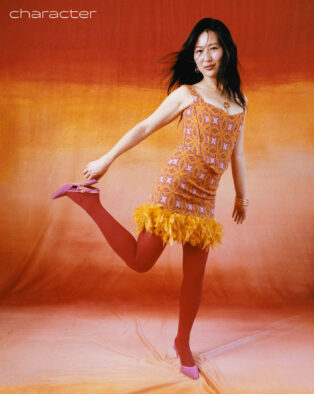
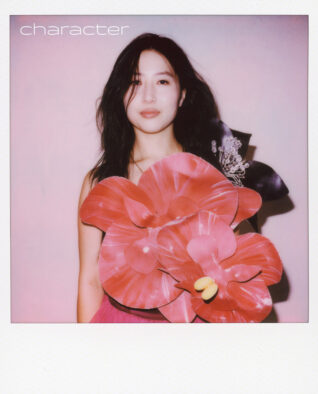
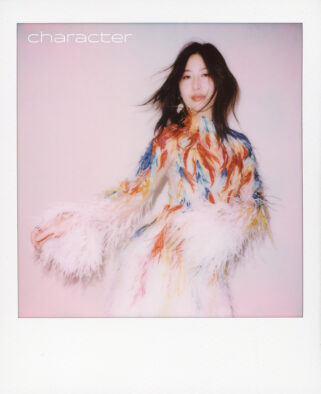
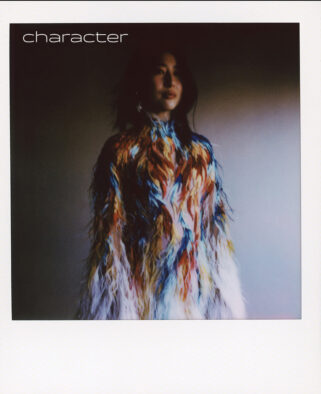
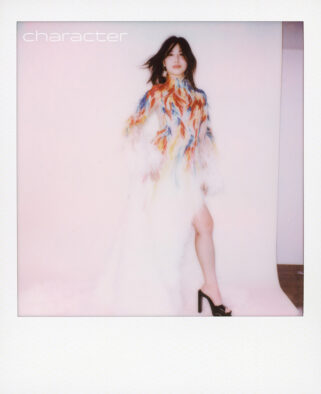
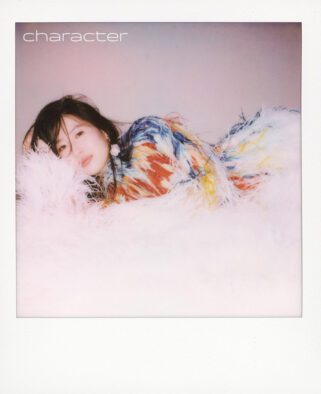
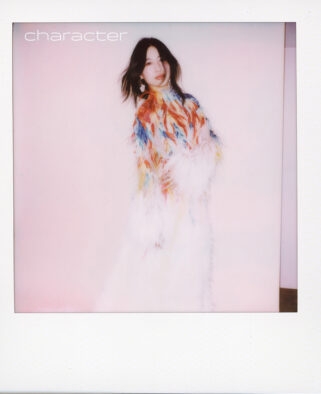
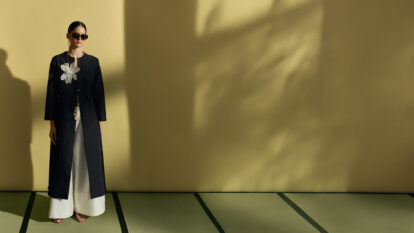
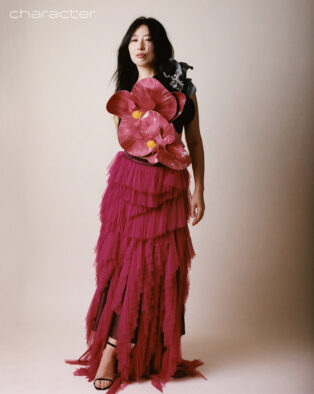
Cover Look: Dress by Le Thanh Hoa @_lethanhhoa_ | Right: Top & Bottom by Claude Kameni @claudekameni Jewelry by Astrid & Agnes @astridoagnes Shoes by Jonak @jonak
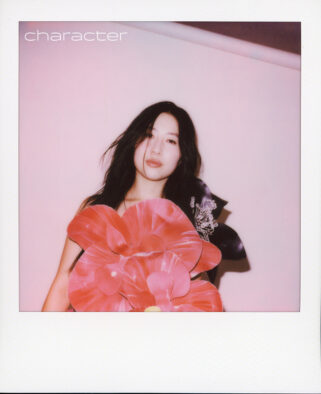
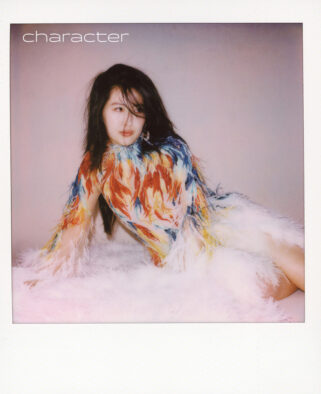
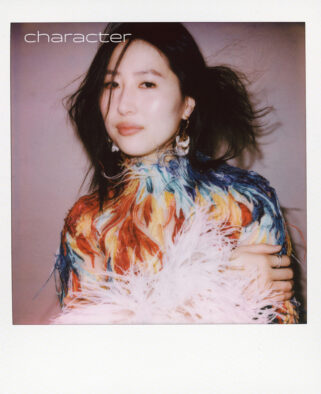
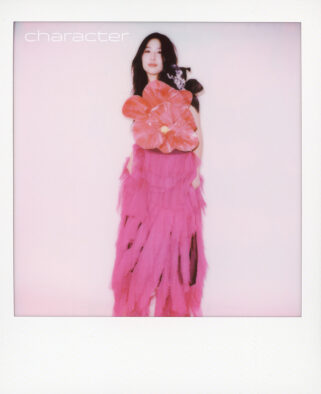
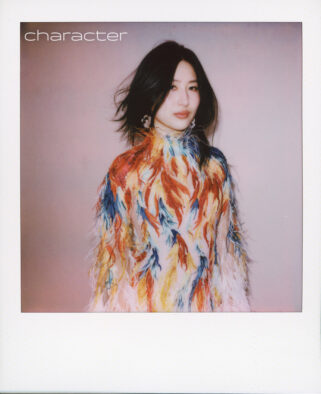
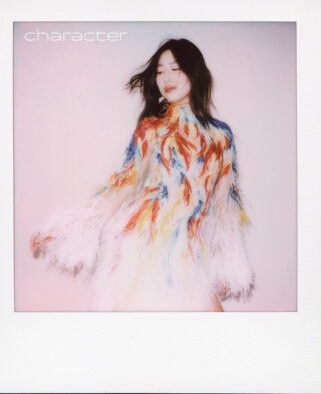
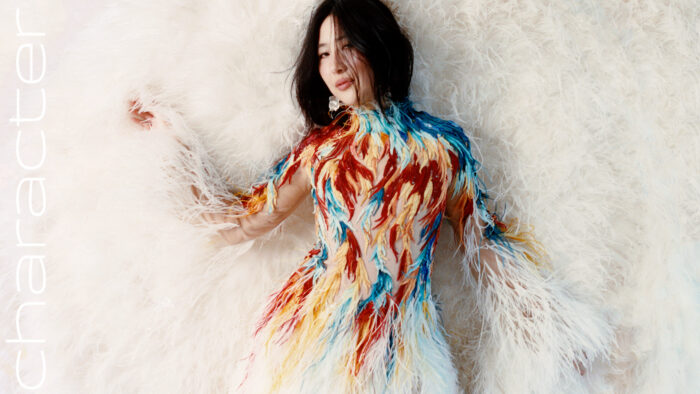
We met Mabel Li in our studio on Sunset Boulevard. Fresh off wrapping the first season of The Testaments, we wanted to give her back something Gilead had spent all season taking away. We dressed her in color. Aunt Vidala never stood a chance.
Mabel Li @mabel_liii
Photography Ashley Seryn @ashleyseryn
Styling Estelle Aporongao @estella.png at Anomalous @anomalous.agency
Makeup Pircilla Pae @pircillapae at A-Frame Agency @aframe_agency
Hair Rena Calhoun @rena.calhoun at A-Frame Agency @aframe_agency
SocialTesia Kuh @thefirstthree.co
Special thanx Nicki Fioravente and Kami Davis at Viewpoint PR @viewpoint.pr
Fashion Director Benjamin Holtrop @benjaminholtrop
Publisher Aleksandar Tomovic @alekandsteph
Production + Location @bellomediagroup x @maisonpriveepr_la
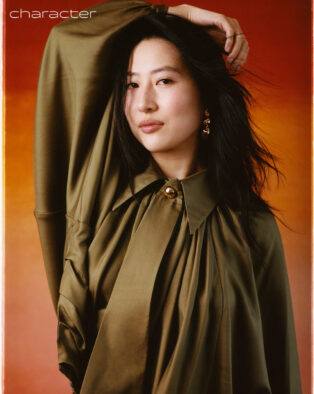
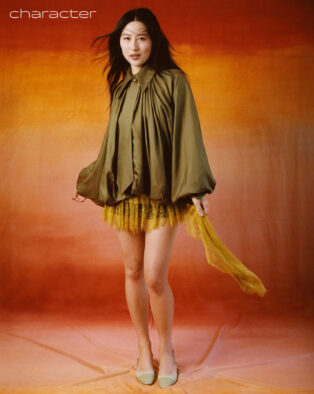
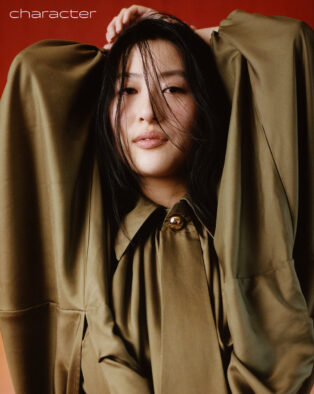
Top by Concepto @conceptoline Skirt by Arabesque Boudoir @arabesqueboudoirmaison Jewelry by Ettika @ettika Shoes by Jonak @jonak
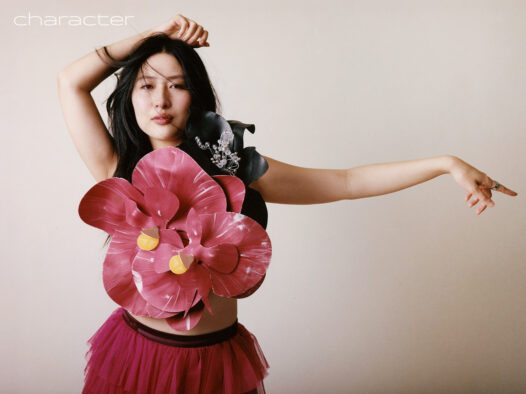
Top by HER.I @her.i.official Bottom by Kaftan Studio @kaftanstudio
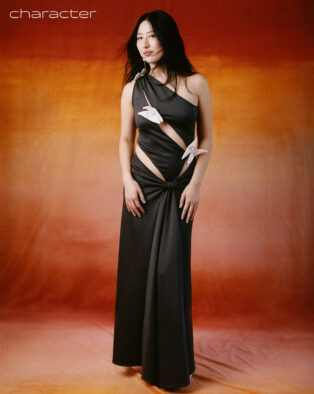
Right Dress by HER.I @her.i.official
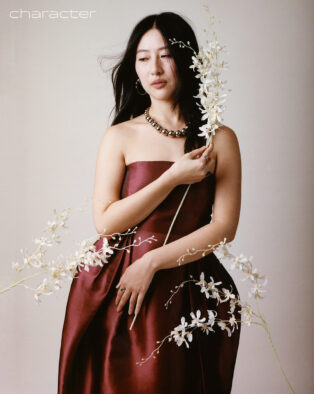
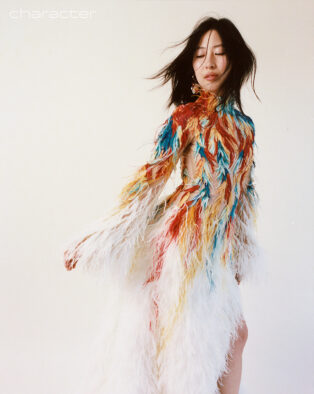
Left: Dress by Concepto @conceptoline Jewelry by Astrid & Agnes @astridoagnes
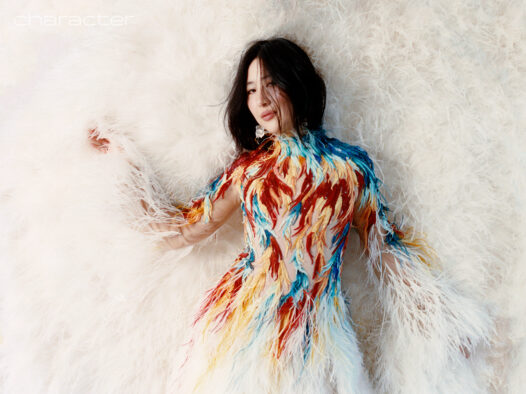
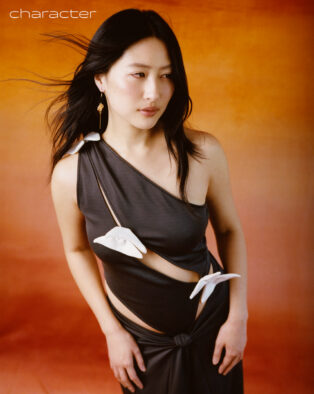
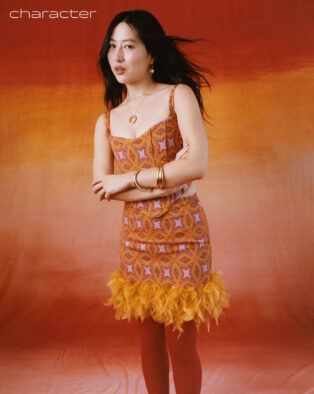
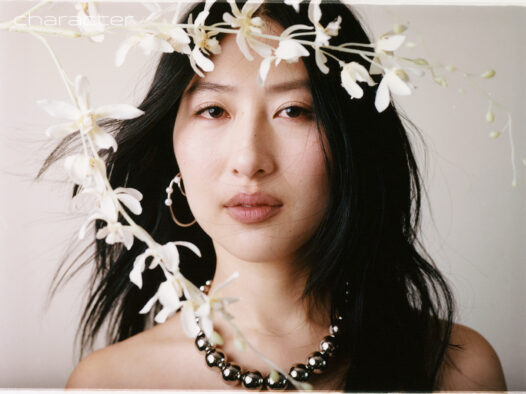
Jewelry by Astrid & Agnes @astridoagnes
Aunt Vidala carries her power in her stillness. There’s something almost more terrifying about restraint than rage. When you were building her, where did you find the physical and psychological architecture of a woman who has turned discipline into devotion?
The costume, glasses, hair and makeup do half of the heavy lifting in terms of finding where the character sits. It was so surreal to put on that costume for the first time, because I had a parasocial relationship with it for many years watching The Handmaid’s Tale. It’s made of wool and it has some weight to it. You feel the groundedness in the way the fabric flows as you walk and the blazer is tight and neat, and it limits your motion. I also did a lot of prep, reading the source material again and again, reading the scripts over and over, imagination background work, but sometimes as an actor I feel like, yeah I can do all of that prep, but nothing replaces the knowledge that I gain from living in the character’s body in the moment. I leave a lot of room for discovering the character the moment I am in the scene with the other actor or actors. I like to leave room to be surprised.
Lydia and Vidala are two sides of the same original wound. What do you think Vidala sees when she looks at Lydia — a mirror, a threat, or something she once wanted to become?
That’s such a great way of putting it, two sides of the same wound. I think she sees Aunt Lydia as a huge threat. I don’t think the trauma of almost being killed by Lydia has ever left her body since it happened. It’s complicated. Part of her envies Aunt Lydia and her position of power and therefore her safety and another part truly feels she could do a better job than Lydia. I think she hates how she’s “softened” by Gilead standards over the years. I think she hates the softness in Lydia because she hates the softness within herself, the softness that she used to be able to embody in her old life. I think she is scared and angry, and then there are times when I feel that she is so numb towards Aunt Lydia to protect herself.
You’ve described episode 6 as scary and relevant in the same breath. That pairing feels very precise. What does it mean to you to be doing this work at this particular moment in history?
We all felt it when we were shooting episode six, the reality that we were depicting in the show. I remember the first AD, Pat, making a big speech with the 300 background actors at the beginning of our Stadium shoot that this is going to be heavy, we are all in it together. It feels very relevant today because of the rise in fascism across the world.
People are stunned hearing your actual voice after watching you as Vidala. That gap between who you are and who she is — did it feel like a costume, or did something in you have to actually travel to her?
Oh wow! I think doing an American dialect and finding the way that she speaks really helps to differentiate between myself and the character. I remember talking to Bruce about how she should be quite clear and articulate in the way she speaks because she is a high-ranking teacher in the Aunt Lydia School. Every character I’ve played, I always find where they live inside of me, and sometimes you’re dialing up and down parts of yourself to create the character. I haven’t experienced some of the specific traumas that Vivian or Aunt Vidala has, and I knew when we were shooting episode six in the stadium it would be so helpful, my body would learn so much about her. It’s fascinating to play someone who, in a way, is wearing a costume that they didn’t consent to wearing, she was forced to be a part of an army. And so, I think part of her surviving is being a really great performer for many years, but as we all know you can only numb for so long before cracks begin to show.
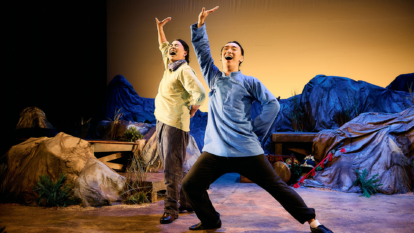
Your verbatim theatre works at NIDA centered Chinese Australian and Vietnamese Australian young people in Western Sydney — voices that are rarely centered. What did those communities teach you about storytelling that you carry into every room you walk into as an actor?
A lot of the people I interviewed for those projects are my actual friends who I grew up with. I grew up around a lot of kids of first-generation Asian immigrants. Our stories are so varied and rich. Writing and making my own stuff in drama school with community taught me how to let the work reveal itself to you as you write it and how creative you can be with little resources.
The Heath Ledger Scholarship: being a finalist for that scholarship places you in a lineage of Australian actors defined by their willingness to go somewhere uncomfortable. Do you feel that inheritance? Is there a version of going all the way there that scares even you?
It was a total honour to be a finalist for the Heath Ledger scholarship. I’m walking on a well-trodden path of Australian actors going to work in North America and I’m grateful so many have navigated this before me. I’ve been the recipient of so much support from the Australians who have been out here, there’s a real big community. I’m not sure that it scares me, I feel super-duper privileged and lucky to be able to work as an actor overseas.
Cate Blanchett, Sarah Snook — and now you. NIDA produces actors with a particular relationship to transformation. What did that training give you that you couldn’t have found anywhere else?
Theatre training has really shaped the actor I’ve become, to take the time to quietly expand your awareness of your voice and body, push the boundaries and surprise yourself away from the eyes of the industry were really helpful. Right before drama school I remember doing a long clowning workshop at ATYP and I think discovering that fundamentally changed my brain chemistry and my creative process. I also want to say I did have a complicated time at drama school as a POC, and I think a lot of these institutions are still in the process of undoing colonial ways of working. Drama school training is at its best when it empowers you to go big and make mistakes, exposes you to a diverse array of tools and some of those work for you and you carry them with you and some of them don’t, and you get to meet other like-minded artists. I also think having worked a lot in the theatre after drama school has allowed me to be a better screen actor.