Jodi Long breaks down the layered reality behind Chinese Republicans, where ambition, identity, and survival intersect in corporate America. The play digs into what Asian women navigate in these spaces, and questions whether the idea of “progress” has really kept up with the times.
Tesia Kuh: So- I have kind of a fun question to start with.
Jodi Long: Yeah, tell me.
TK: The play utilizes strong language. Do you have a favorite curse word?
JL: Well, I think one other character says fuck more than I do, but, you know what I loved about this play when I first read it, and I started working on this about two and a half years ago. We did our first, the first reading, I think it was at South Coast Rep. And I was like, wow, there’s, you know, so much cursing in this, and we never see Asian women doing this in a play or in a movie. They’re so ferocious, these women. And you usually see them as, you know, little lotus blossoms or immigrants or whatever. Not that immigrants don’t curse. But, I mean, I was really just so delighted that Alex wrote this play. Very tough women.
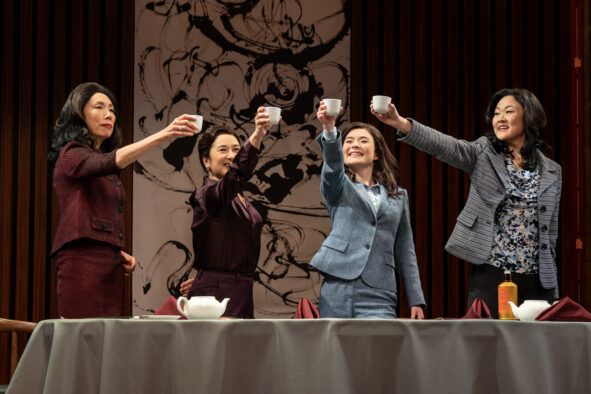
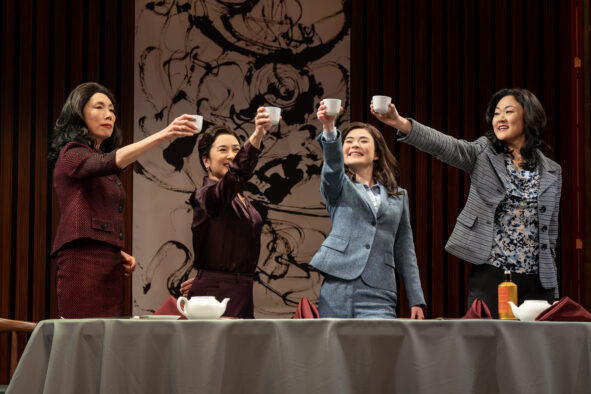
Chinese Republicans Production Photos by Joan Marcus
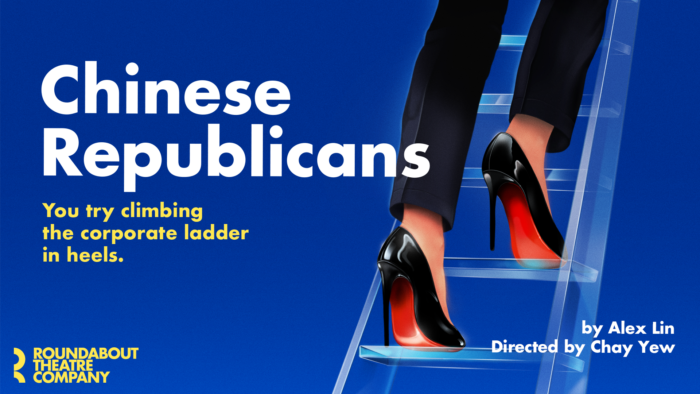
TK: The title alone, Chinese Republicans, sparks immediate curiosity. What is this play really saying about the boxes people try to put Asians Americans into?
JL: These women are Republicans, or mostly Republicans, because they think that making the economy good is gonna be better for them. My character says that directly out loud in the play. And I don’t know if that’s really so true. I know a lot of Asian Republicans, unbelievably. And I just think that that is just one part of this. What Asian women go through in a corporate situation, which is also what this play is about, and the glass ceiling that they encounter, not just as women, but definitely as Asian women. In the first week of previews, friends of mine came who, one’s family owns a bank in Chinatown here in New York, and the other two were bankers and traders. And they were telling me that women were not al- allowed on the floor of, the trading floor until 1978. There were so few women that they were incredibly competitive with each other, and that almost became sport for the men, to see the women fight in these side rooms. So I just think we’ve come a long way since 1978, maybe, on certain levels. And then this one woman who actually moved to Asia because she knew she would get farther in that world in Asia than she would in New York City.
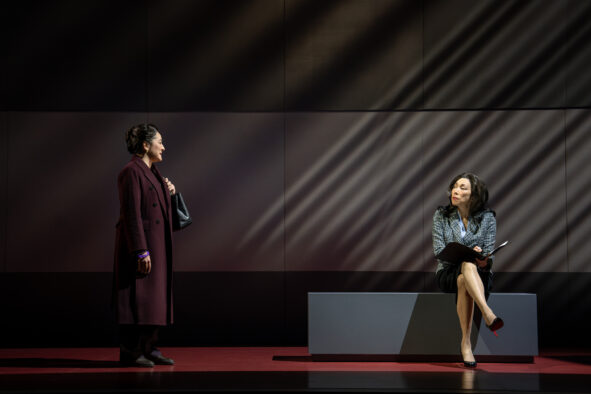
Chinese Republicans Production Photos by Joan Marcus
TK: This group of women have clearly fought very hard to succeed. What do you admire about Phyllis, and what do you challenge about her?
JL: I admire her because she’s the oldest and has been there the longest, and she has learned how to maneuver the system, at least in, from her point of view. This was one of the things when I got with the costumer, Anita Yavich, who’s an amazing costumer for the show- I said to her, “I think I need to be wearing a skirt or a dress all the time,” ’cause that’s what women did in corporate, right? They had to not look like a man, be feminine enough, as Phyllis says. So she knew how to maneuver that, and she’s trying to pass that on to the younger people who may not be so inclined to do that. So there is this shift in generations but yet Phyllis really knew how to play the game. And I think that even in Hollywood, the older generation has played the game one way, and the next generation comes in and says, “Wait a second, that really doesn’t work.” I’m not saying it’s bad. I’m just saying that that’s progress. One of my favorite lines in the play is “The moment you think the world is making progress is the moment you become outdated.” Right? Because you think, “Oh, this is all going so well,” and then all of a sudden it passes you by ’cause there’s something else that’s happening.
TK: I was gonna ask you about that line. Do you see that line as cynicism, realism, or something else?
JL: I see it as realism. I mean, all this stuff with AI. Every other day there’s something new happening. Just when I think I’ve got my handle on it, it changes, and I’m like, “Oh my God, now I gotta think about something else,” and sometimes I don’t even wanna engage with it. So then if you just lapse for a half a second or a week, you’re outdated. Your thought about how that’s working is not working like that anymore.
TK: Thank you for adding some color to that. The last question I have for you is what advice do you have for young girls trying to climb the corporate ladder today?
JL: I’m not the person to talk to about that. I mean, I could say maybe about the industry. But I, I don’t know. I think that it’s an interesting question you pose. I’m not in the corporate world, I just act in it. I think we still have to stand up for women’s rights, and that’s a constant process, especially now in the atmosphere that we’re in, in coming from Washington, where they’re trying to lessen women again. We have to be so strong and constantly speak up for ourselves. I just think that they are trying to squash us all over again. Like, to go back to the ’60s or whatever, early ’70s, and, and no. I just say no. We can’t do that. We have to move forward with hope and grace and the smarts. We have to be smart. And that’s what I love about Phyllis, because knowing how to maneuver that world is important. It may not work all the time, but you have to know what you’re up against, right?