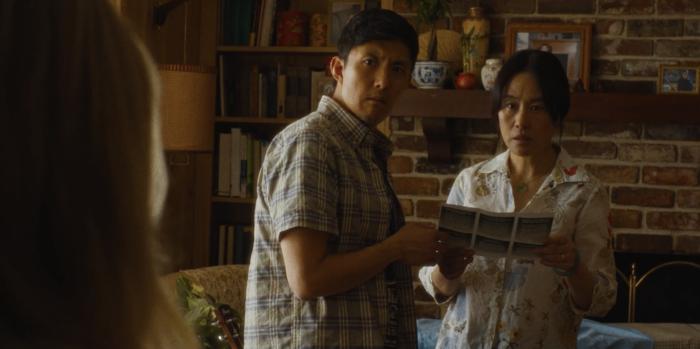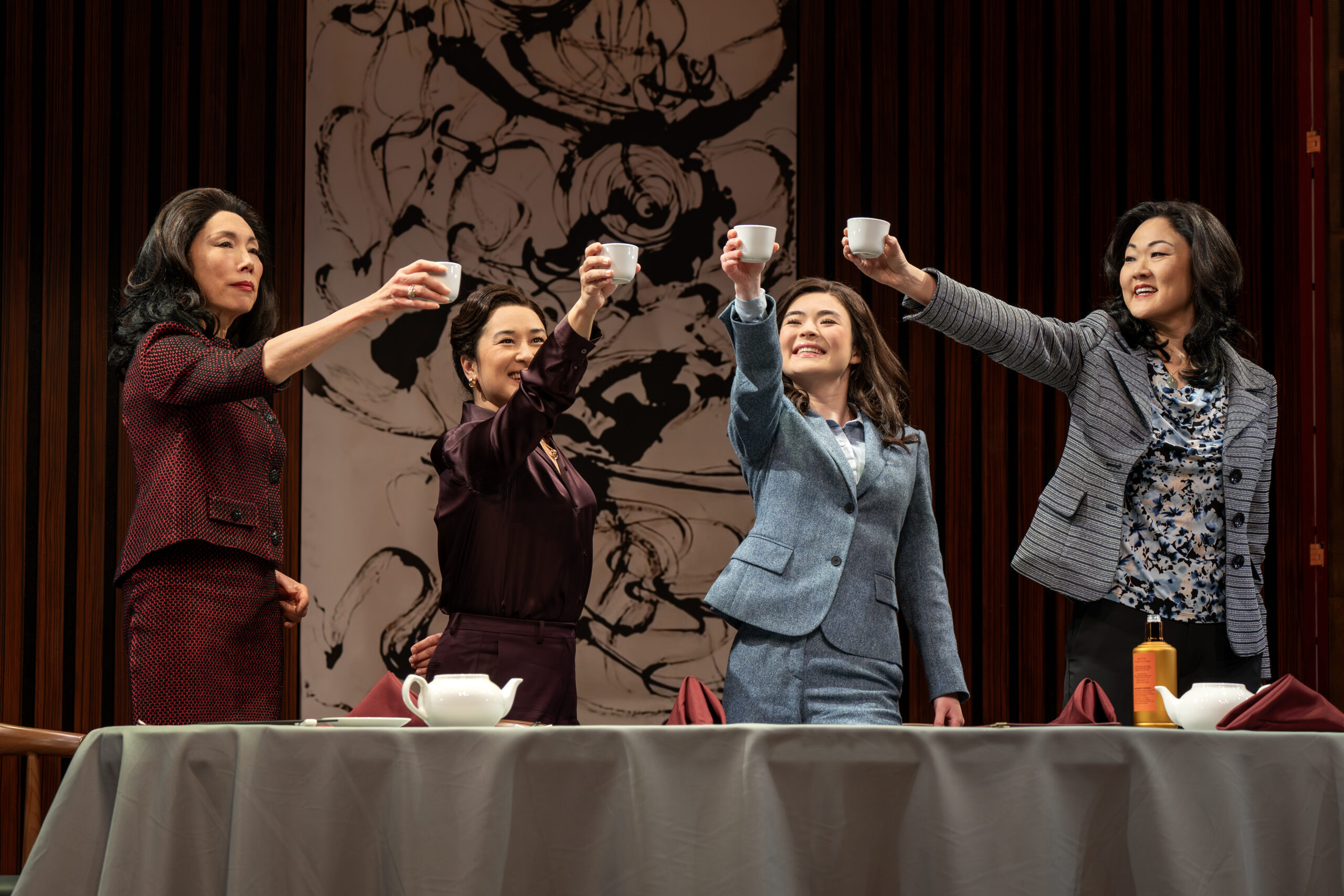
What would you change about yourself to belong? That question sits at the heart of Slanted, a bold, genre-bending film from writer-director Amy Wang that blends satire, sci-fi, and body horror to unpack identity, beauty, and assimilation. The story follows Joan Huang, a high schooler who undergoes a controversial procedure to become white in pursuit of popularity and acceptance, only to confront the deeper cost of erasing who she is.
For director and writer Amy Wang, the story is deeply personal. Born in China and raised in Australia, she shared how her early years were shaped by a constant pressure to fit in. Even after mastering the language and culture, she realized something unsettling: no matter how hard she tried, her appearance still marked her as “other.” That tension became the emotional core of Slanted. Slanted is now playing in theaters.
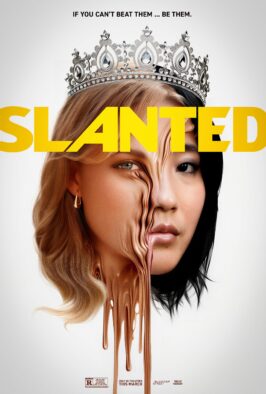
Tesia Kuh: Such a powerful movie. It just hits the nail on the head. You mentioned the film was inspired by your own experiences growing up. What inspired you to make this film?
Amy Wang: Yeah. So, you know, I was an immigrant from China. I was born in China, and I immigrated to Australia when I was seven. I didn’t know a word of English and, you know, spent, I feel like my early years, my teens, really trying to just fit in as much as possible, and to, to feel like I was Australian. But in order to do that, I had to really try and forget and erase my Asian side as much as possible to kind of… It, it almost felt like I was tricking the Australian people that I was part of their society. But I soon very quickly realized that even if I spoke perfect English and was sporty, and dressed a certain way, when people saw my face, it didn’t matter because my face always gave away that I wasn’t white or Australian. So the idea of like, you know, “Fuck, wouldn’t life just be easier if I was white?” kind of came from that. I got a job at Target, that was my first job when I was 14 and nine months, and every weekend when I worked at Target, dozens, literally dozens of white Australians would come up to me and be like, “Wow,” like, “Congratulations, you don’t speak English with an accent.” Or like, “Where are you really from?” And just all of those questions and statements that again, just really reminded me that it didn’t really matter how hard I tried to fit in, my face was always the thing that was gonna give it away. That’s kind of the core of what this film is about.
TK: The opening scene, tears came to my eyes when I realized the full meaning of the title Slanted and how it had a double meaning. There’s lots of moments where this film uses humor and satire to talk about shame and assimilation. How did you come to realize that you weren’t alone in these experiences?
AW: I mean, I knew pretty early, but it honestly wasn’t something I really talked about until there was a spa shooting 2021 in Atlanta where a bunch of Asian American female spa workers were killed. I don’t know if you remember that incident. But after reading about that, I wrote a Instagram post and, just really talked about my experiences and talked about how I saw myself, and the difficulties of being a person of color, and the types of racism I’ve experienced throughout my life. And so many people I knew from high school, from university, from AFI, the American Film Institute, and from just people around me DM’d me or texted me and told me they felt the exact same way but were never able to really talk about it or, you know, always thought it but never was able to express it. By that point I’d already started coming up with this idea for the film, but it just really reinforced that idea that this is really a very universal experience. And I also wanna say like, even if it’s not about race that you wanna change about yourself, I feel like everybody have, they, they all have different types of insecurities and that’s something that I think people can relate to, and that’s what this film also speaks to.
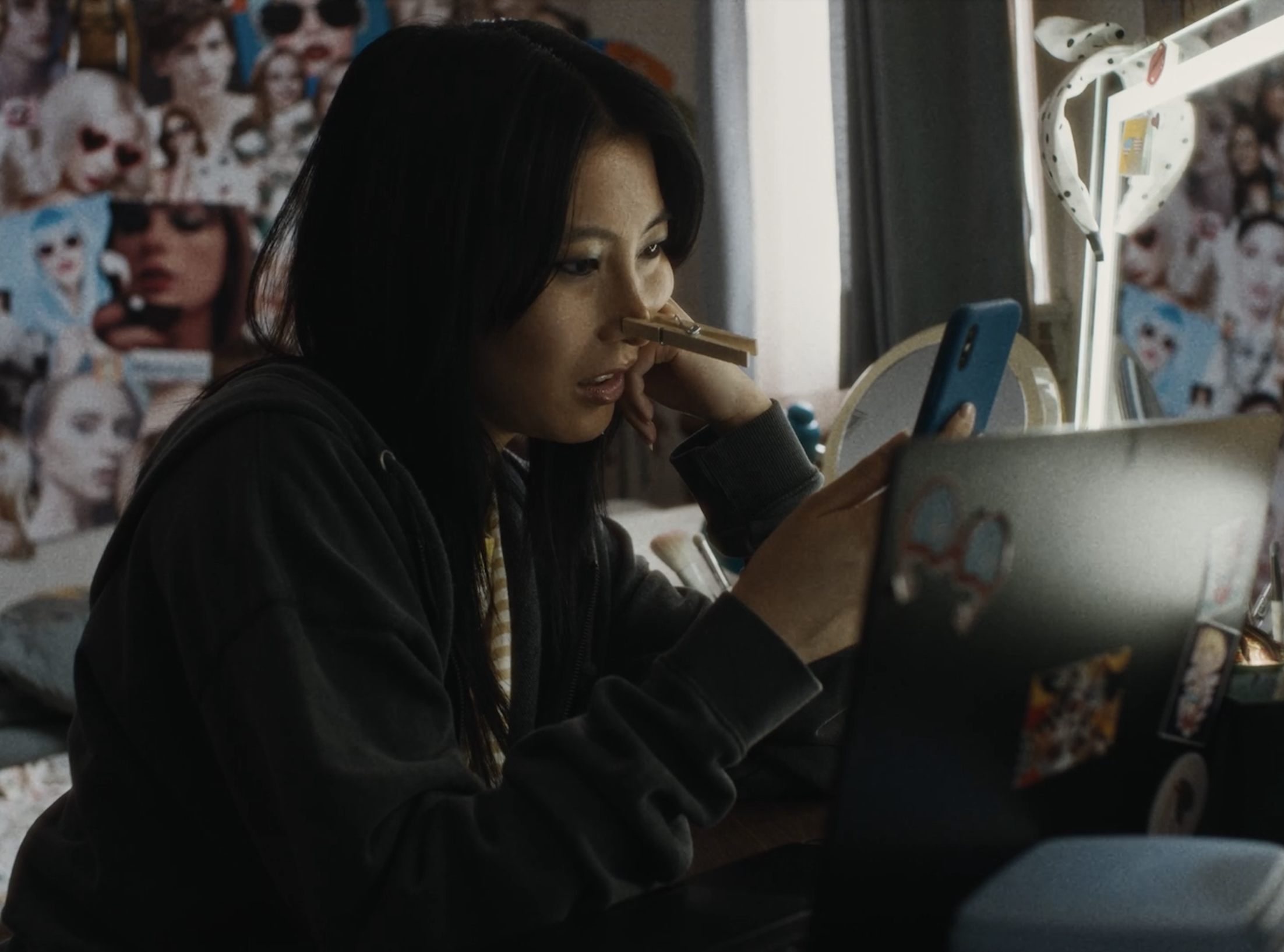
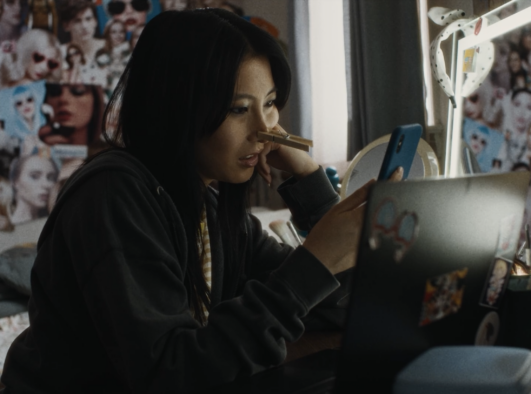
TK: When I saw her with the clothes pin on her nose, I was like, “Yeah, I remember I used to do that.” Oh my God. And my mom told me to do that.
AW: Isn’t that crazy too, when parents kind of almost a part of the problem?
TK: What do you hope audiences question about beauty or belonging after watching the film?
AW: I want people to confront their own feelings of insecurities because I feel like it took me a long time. And, and if I had seen a movie like this when I was in my 20s or even when I was in my teens, I would have, I think, confronted those feelings earlier and maybe been able to work through them quicker and earlier. So that’s, that’s ultimately what I want. I want people to watch this film to feel seen, for the people who relate, right? For them to feel seen and for them to be able to hopefully work through their own issues and, and feelings of not being good enough or not being pretty enough. But then also for people who maybe didn’t have the same upbringing that we both had, for those people to see… I mean, for the white people who watch the film, right? For them to see this experience represented, and to find understanding, and to have empathy for, I think, a very large group of people, Asian, Black, Latino, whatever. All who-Unfortunately did undergo, feelings of inadequacy and shame and know that that experience exists, what it looks like.
TK: You have an incredible cast with Shirley, McKenna, and Maitreyi. What did each of them bring to the film that you… that kind of took you by surprise?
AW: Oh, I mean, with Shirley, I’d always been such a huge fan of hers, you know, from even from her early days. She did a great short film called Krista, um, that always really stuck with me, and I think her as a actress, she’s very, very intuitive. She’s very reactive and in the moment, and so thoughtful, and I think she brought so much of Joan’s inner life, outwards because of that.
For McKenna, I think she’s such a skilled performer. She… I mean, she really had the difficult job of convincing the audience that she was the same person as this Chinese girl, and I think she fucking killed it. So the amount of work she put into that, the physicalities, even though she’s not an Asian girl, she shared a lot of really intimate things about herself and her own insecurities, and it really reminded me of, yeah, each person’s insecurity is very different.
Even Maitreyi’s character, even though she’s not insecure about her race, she might be insecure about something else that maybe Joan doesn’t even understand, you know? So each person, a person might be insecure about their sexuality. Maybe a person’s insecure about, their weight or whatever it is. Each person’s different and to embrace the whatever is different about, you know, everybody. With Maitreyi, one of the best scenes I think in the film is when she’s having her fight with McKenna by the lockers in the, in the school, and she asks, um, “McKenna, you know, if you, if you did this surgery, does this mean you think I’m ugly, too?” It’s such a powerful moment and line, and that was all Maitreyi. It wasn’t in the script, and when I had a Zoom with her in pre-production, because she had done all the work and she had thought so deeply into what this character would do and react to, she said, you know, “I think if this happened to me and my best friend, you know, Joan, my best friend did this, I would question how she perceived me and how she saw me.” And, and yeah, I would think, “Do you think I’m ugly, too?” And it was just such a powerful statement. I put it into script thanks to her and it has made the film infinitely better because of it. So kudos to her.
TK: What’s one thing we can all do to practice self-love?
AW: I think self-love is all about accepting yourself, the good and the bad, to try and stay away from judgment because I think every person is trying to be the best that they can and do the best that they can, and to give yourself grace. I don’t think there’s one thing I could say to 16-year-old Amy that could have convinced her to love herself and to not want to be white because of what society was telling her, because of beauty standards, of all of it, pop culture. But I think I would tell her as much as you can, look within yourself and accept the things that make you different ’cause that’s really your superpower, and know that uniqueness is really the best thing anybody could ever have is to be unique and not follow the trend or do what everybody else is doing because, at the end of the day, I think in all facets of life, like especially in the arts, it’s your uniqueness that gets seen, and it’s your uniqueness and your unique point of view thatstands out from the crowd, and makes you special. So embrace that.